


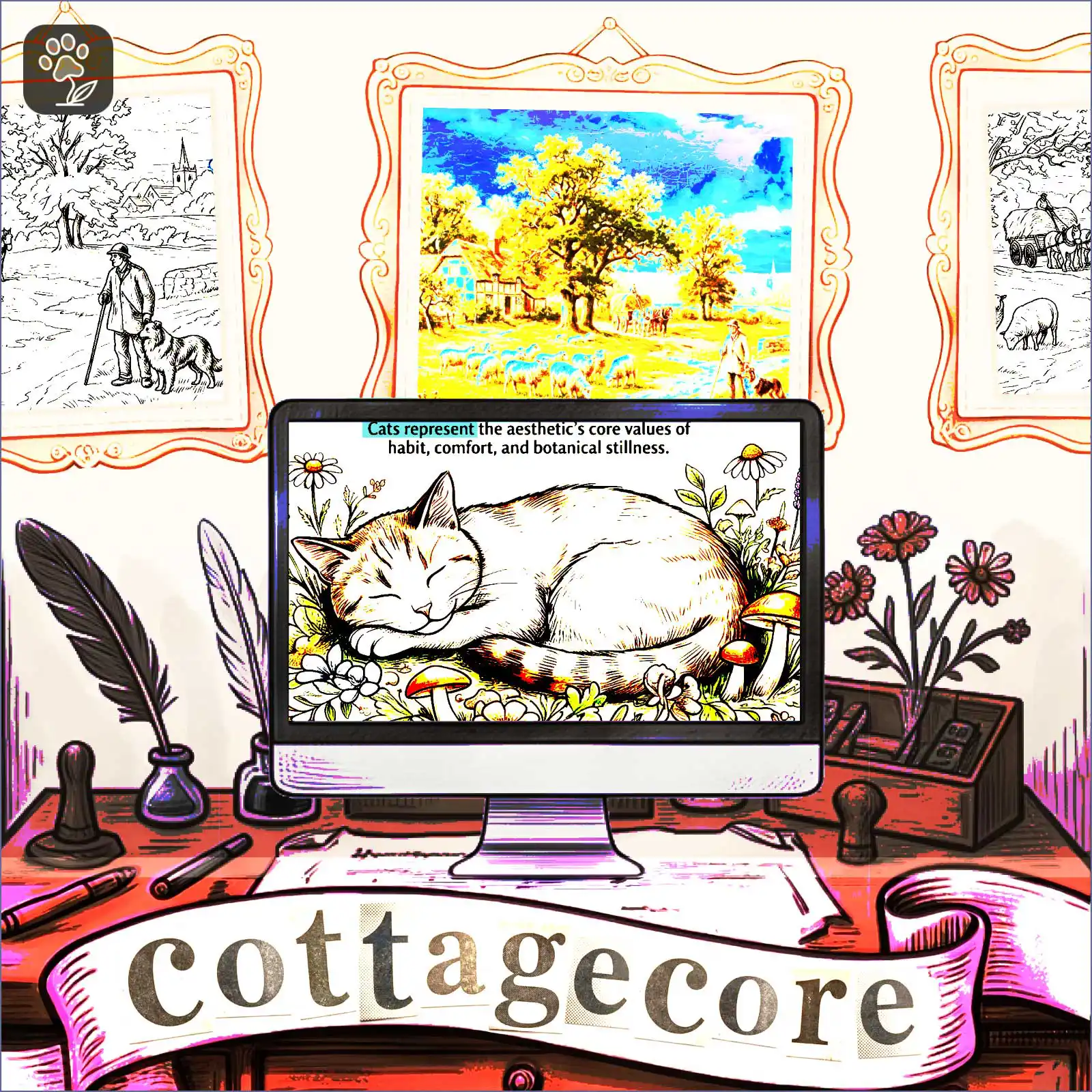
People often describe cottagecore as an attempt to slow life down. Gardens, handmade things, natural materials, a quieter pace. At its heart it is a reaction — not to any one moment, but to the general speed of contemporary life.
The interesting thing is that it keeps coming back.
Where it comes from
Visually, cottagecore borrows from several traditions: English pastoral painting, Victorian botanical illustration, Scandinavian folk art, and the quieter corners of the Arts and Crafts movement.
The difference is that people actively choose this aesthetic today. It is not inherited or accidental. Someone decides to surround themselves with florals and earthenware and slow mornings. That deliberate quality is what makes it different from simple nostalgia.
Why it keeps returning
Every few years, something like cottagecore resurfaces under a different name. Hygge. Slow living. Dark academia. Goblincore. Each version shares a preference for textures and objects that carry a sense of history — and a resistance to the idea that everything should be fast, optimised and disposable.
Cats in this world
Cats fit naturally into cottagecore imagery. Gardens, windowsills, old books and quiet interiors are spaces where people already imagine cats, so they become part of the visual language almost without trying.
That is partly why we keep drawing them in this context. It does not feel forced. A cat on a garden wall, a cat among herbs, a cat ignoring a stack of pressed flowers — these feel like scenes that could actually exist.
What this means for design
For illustrated design, cottagecore offers a stable visual vocabulary — florals, mushrooms, herbs, soft light, earthy palettes — that connects immediately with a wide audience.
The challenge is to bring something specific to it. To find the detail that makes a design feel observed rather than assembled from references.
That is what the Cottagecore Cats collection attempts: illustrations that feel like they came from somewhere particular, not from a mood board.